EUDCA
Sovereignty and competitiveness will define Europe’s digital future
Who controls the digital infrastructure that underpins our economy has become a strategic issue that sits at the heart of Europe’s ability to compete, innovate, and act independently in a rapidly changing geopolitical landscape.
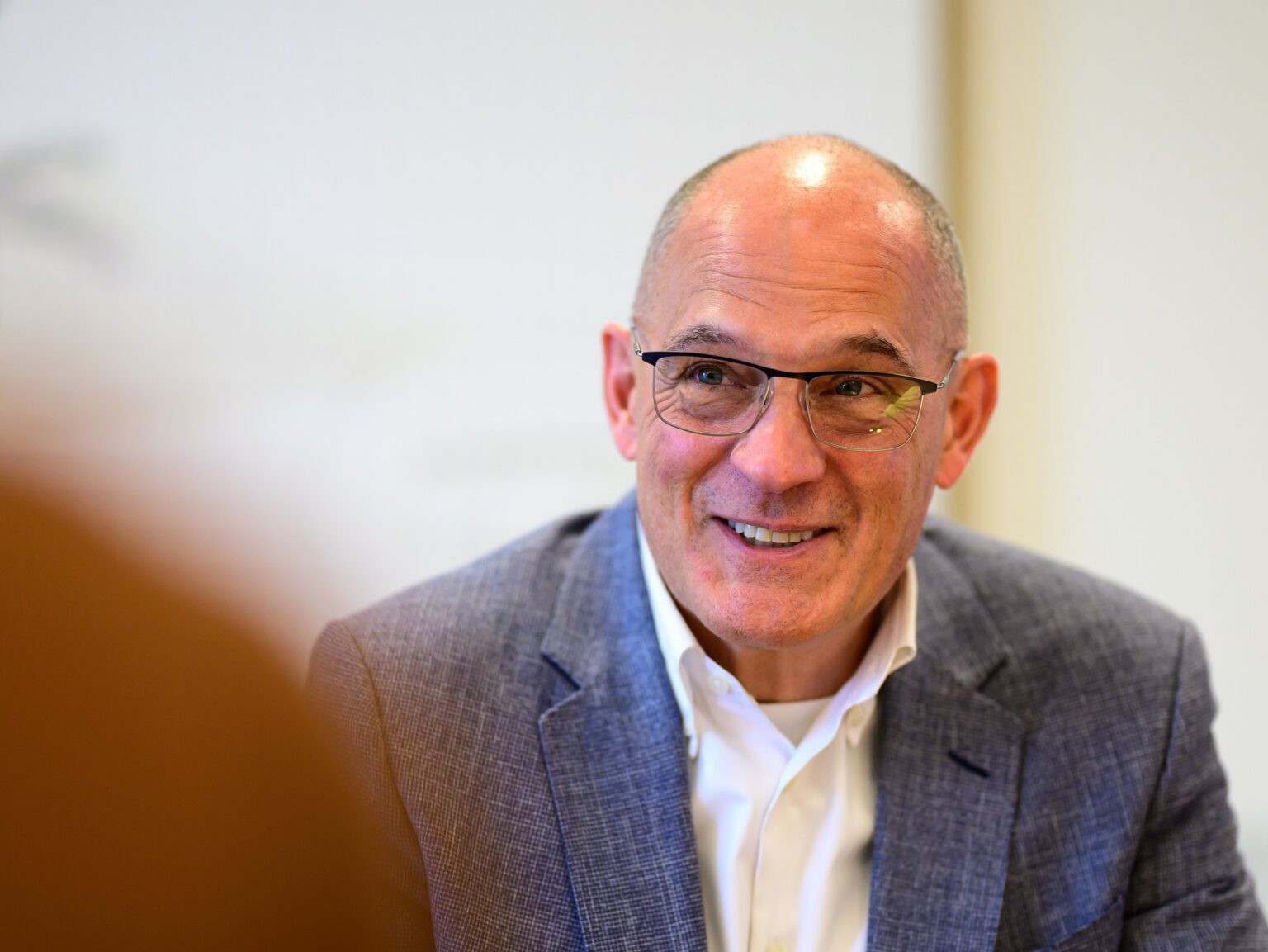
For Michael Winterson, Secretary General of the European Data Centre Association (EUDCA), the shift is unmistakable: “Sovereignty, but let’s not forget also competitiveness, is one of the defining issues in Europe. It is about security, but also about economic strength. The two are inseparable,” he says.
Across Europe, policymakers and industry leaders are rethinking how digital systems are built, governed and scaled. The focus is no longer just on accelerating digitalisation, but on ensuring that it happens in a way that preserves control, resilience, strategic autonomy and long-term competitiveness. At its core, Winterson notes, the challenge is structural: Europe still operates as a collection of national markets rather than a truly integrated digital ecosystem.
Why has digital sovereignty become such a pressing issue?
Michael Winterson: “In just a few years, the narrative has shifted significantly. Around 2019, the focus was on going digital and going green. Today, the dominant themes are competitiveness and geopolitical security. Sovereignty sits right at the intersection of those two. There is a growing awareness that Europe relies heavily on a limited number of non-European technology providers, particularly in cloud and platform services. That dependency creates vulnerability: technically, economically, and politically. What is new, is that this is no longer a niche concern. It is a central topic in Brussels and influences a wide range of policy initiatives.”
How should we understand that dependency?
Michael Winterson: “It is often underestimated because the systems work very well. These platforms are efficient, scalable and widely adopted. That is exactly why they are so dominant. But the current concern is about control. When critical infrastructure and data flows depend on external jurisdictions, you introduce a layer of uncertainty that is difficult to manage. That becomes particularly relevant in times of geopolitical tension. At the same time, we should be careful not to frame this as a purely negative story. These technologies have enabled enormous growth. The challenge is not to replace them entirely, but to rebalance the ecosystem.”
Is Europe confronted with a technological gap, or is it something else?
Michael Winterson: “It is not primarily a technology problem. Europe has strong capabilities and successful digital companies. The real issue is structural: Europe still operates as 27 fragmented markets rather than one integrated digital ecosystem. That fragmentation makes it difficult for European solutions to scale, attract investment and compete globally.”
LCL’s CEO, Laurens van Reijen, also points to mindset as a key barrier. Do you agree?
Michael Winterson: “Yes, very much so. Behaviour plays a major role. Organisations tend to default to what is familiar, especially when switching involves perceived risk. As I often say: organisations will only change if something is cheaper, easier or if they are required to. Today, many sovereign or European alternatives do not yet meet those criteria, which slows down adoption.”
What role should governments play in this transition?
Michael Winterson: “Governments have a crucial role, but not primarily through regulation. The most effective approach is to lead by example. Public institutions should apply sovereignty principles to their own systems first. That creates demand for European solutions, which allows them to scale, improve and become more competitive. In that sense, governments act as a catalyst. By making deliberate choices in procurement, they can help build the market they want to see.”
Sovereignty is often seen as complex. How can it be made more actionable?
Michael Winterson: “One of the key challenges is that sovereignty is often treated as a binary concept: either something is sovereign or it is not. In reality, it is much more nuanced. You need to look at multiple layers: infrastructure, hardware, software, and data. Each of these can have different levels of control and risk. In some cases, you can achieve a high level of sovereignty even when using global technologies, depending on how systems are configured, secured and governed. That is why a more granular, layered approach is essential.”
That suggests sovereignty is not necessarily about excluding non-European technologies?
Michael Winterson: “Exactly. It is not about saying everything must be European. That would neither be realistic nor efficient. It is about understanding where risks sit, and how to manage them. That includes looking at concepts such as ‘made in Europe’ versus ‘made with Europe’, where you assess the role and criticality of European components within a broader technology stack. This kind of thinking allows for a more pragmatic and scalable approach.”
What are the main barriers to progress today?
Michael Winterson: “Cost and complexity are major factors. Implementing sovereignty can be expensive. From a business perspective, what you hear most often is: cost, cost, cost. That is why clarity is so important. Companies need clear guidance on what sovereignty means in practice and what is expected from them.”
How does this link to Europe’s competitiveness?
Michael Winterson: “They are deeply connected. If European companies do not have access to competitive, scalable, and trustworthy technology, they will fall behind their global peers. At the same time, without sovereignty, Europe risks losing control over critical infrastructure and data flows. So, it is not a trade-off, it is a dual challenge that must be addressed together. This is ultimately about creating the conditions for European companies to innovate, scale and compete.”
What could success look like for Europe?
Michael Winterson: “A truly integrated European technology market. One where a company in Belgium feels just as confident using a solution from Spain, Sweden, or France as from its own country. That requires scale, interoperability, and trust. But it also requires a shift in mindset from national thinking to European thinking. We already have examples of European companies that have succeeded globally. The challenge is to create more of them, and to create the conditions in which they can grow.”