
Haskoning & LCL
Ambition starts at the drawing board
Building on the lessons from LCL Brussels-West, we approach low-carbon, future-proof building design as an integral part of design, procurement, and long-term asset management in line with our broader sustainability strategy. This is pursued without compromising fundamentals of reliability, redundancy, and scalability.
As we continue to expand and upgrade LCL’s data centers, sustainability is increasingly shaping key decisions early in the project life cycle. Energy efficiency remains a baseline, but recent projects also address embedded carbon in construction materials, the lifespan and replaceability of MEP installations and the ability of buildings to adapt over time without major structural interventions as requirements evolve. Decisions around cooling concepts, redundancy, and efficiency directly influence how water is used over a data center’s lifetime, making water another parameter that must be considered early and structurally.
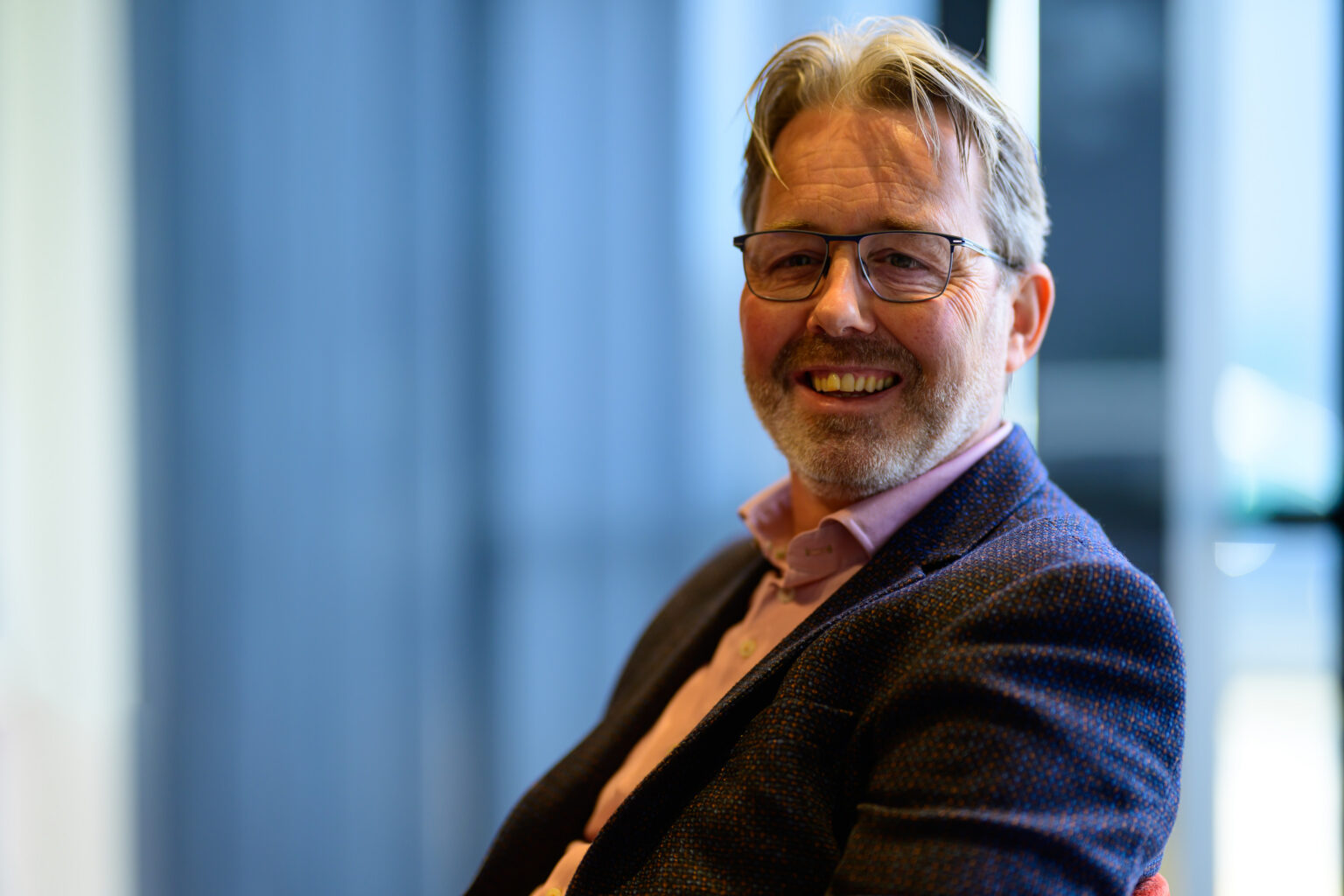
Floris Smits, LCL’s Chief Project Officer, and Stijn de Kruijf, LCL’s Data Center Lead at Haskoning, share their views on the importance of embedding sustainability into building design from the very beginning.
“When we carried out an LCA for one of our data centers at LCL Brussels-West, we gained a concrete reference point that now informs how LCL’s future data center buildings are designed, evaluated, and improved over their full life cycle. That LCA gave us a baseline,” says Smits. “Which is fundamental, because once you quantify impact, you can translate your ambition into concrete design choices,” adds de Kruijf.
Why is it so important to embed sustainability early in the design process?
Floris Smits: “Embedding sustainability means that carbon impact and material choices are discussed before technical layouts are fixed. For example, we assess how long specific installations are expected to remain in use, whether components can be replaced independently, and how a building can evolve as technology changes. Those considerations influence decisions on structure, spacing, and technical redundancy. The same applies to water: decisions around cooling concepts determine water efficiency long before a building becomes operational.”
What concrete benefits come from more energy-efficient and environmentally conscious building design?
Stijn de Kruijf: “For many years, the sector focused on operational efficiency, using metrics such as PUE. That delivered important improvements and remains relevant. However, LCAs clearly show that construction materials and technical installations account for a significant share of total carbon impact: concrete, steel, and MEP systems are the main drivers of embodied emissions. By quantifying those impacts, we can identify where design optimisation makes the most sense, whether that is reducing material volumes, selecting alternative materials or processes, or extending the lifespan of installations. This allows sustainability considerations to be integrated into design decisions in a structured and measurable way.”
Floris Smits: “For LCL Brussels-West, the LCA provided exactly that insight. That’s why we now use it as an internal reference point: it informs discussions and helps us prioritise improvement areas in future projects.”
How does the collaboration between LCL and Haskoning support this approach?
Floris Smits: “Our ongoing collaboration goes beyond individual projects. Haskoning is involved from early design stages through execution. That continuity allows lessons learned on one project to be systematically applied to the next. This is particularly important for sustainability, where progress is incremental. Each project helps refine design principles, procurement practices, and measurement approaches.
In addition, we have set up a joint working group between LCL and Haskoning that looks beyond ongoing projects. Within that group, we reflect on future-proof materials, evolving construction methods, and emerging sustainability standards, so that insights can be translated into upcoming designs rather than remaining theoretical.”
Stijn de Kruijf: “Sustainability maturity does not emerge overnight. By working together across multiple projects, we can test assumptions, improve data quality, and gradually raise ambitions. LCL’s willingness to involve partners early creates the conditions for that learning process.”
Procurement plays a key role in greener and more sustainable buildings. What concrete actions are currently in place?
Floris Smits: “Procurement is one of our most effective levers. ESG criteria are embedded in our procurement policy alongside cost, quality, and reliability. This applies both to supplier selection and to how we manage assets throughout their life cycle. A concrete example is a collaboration with Out of Use, which focuses on the structured take-back and sustainable processing of MEP equipment at the end of life. Instead of treating components as waste, equipment is dismantled, sorted, and either reused or recycled in a controlled manner. Independent analyses show that this take-back and processing delivers better circular outcomes. In our case actual material recovery increases by 14.08% and circular outflow by 7.42%, resulting in a 3.71% improvement in overall material circularity compared to conventional, model-based waste streams. At the same time, the analysis confirms that circular inflow remains low, indicating that the largest remaining leverage lies upstream, so our focus should be on closer collaboration with suppliers on material selection, design for reuse, and take-back arrangements.”
Stijn de Kruijf: “Circularity only works if it is organised structurally. Designing systems with disassembly in mind, specifying components that can be separated and aligning procurement with processing partners all require coordination across the supply chain.”
For which procurement categories and building projects do these actions apply?
Floris Smits: “We focus first on categories with the largest environmental impact and longest life cycles. This includes construction work and major MEP assets such as generators, UPS systems, cooling installations, and electrical infrastructure. In addition, ESG criteria are increasingly integrated into supplier selection and waste processing partnerships. We ask suppliers to complete our ESG questionnaires and monitor progress over time, thereby inspiring and encouraging them to improve continuously.”
What is the expected timing for these actions and the green building measurement framework?
Floris Smits: “Some initiatives are already recurring and fully operational today, including specific circularity initiatives with Out of Use and Close the Gap. In parallel, we are developing a green building measurement framework, which we plan to implement from 2026 onwards. This framework will allow us to consistently assess sustainability performance across building projects, covering energy efficiency, embedded carbon, circularity, and material choices. It also supports alignment with CSRD reporting requirements.”
How do these actions help LCL reduce environmental impact and stay ahead of regulatory requirements?
Stijn de Kruijf: “By embedding measurement, circularity, and documentation into design and procurement today, companies such as LCL significantly reduce future compliance risks.”
Floris Smits: “These actions directly address risks identified in our double materiality assessment, including resource scarcity, regulatory change and environmental impact. By integrating sustainability into building projects, we reduce our footprint while strengthening long-term operational resilience, with reliability always remaining a core requirement.”